Volkswagen’s decision to pause ID.4 production at its Chattanooga, Tennessee plant marks one of the more significant course corrections in the American EV landscape. The halt, driven by a combination of softening consumer demand, tariff complications on imported components, and mounting inventory pressure, raises uncomfortable questions for the broader industry. Is this a temporary recalibration, or an early indicator that the mass-market EV transition is stalling in ways that legacy automakers didn’t anticipate?
For dealer groups, fleet managers, and automotive strategists watching the electrification timeline, the VW ID.4 production halt deserves more than a headline skim. It’s a case study in how macroeconomic forces, trade policy, and consumer sentiment can converge to disrupt even well-funded electrification plans.
What Happened at Chattanooga
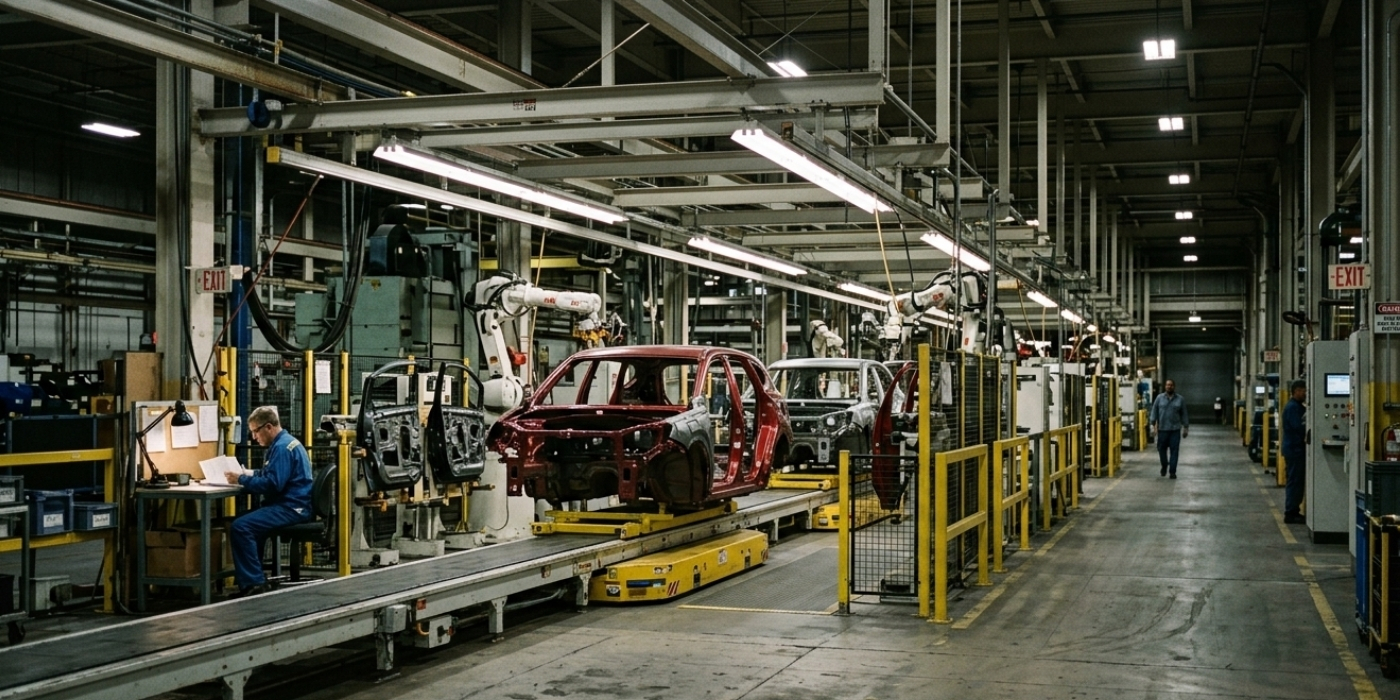
Volkswagen began U.S. assembly of the ID.4 at its Chattanooga facility in 2022, part of a broader plan to localize production and qualify for federal EV tax credits under the Inflation Reduction Act. The move was supposed to be a cornerstone of VW’s North American electrification push, reducing dependence on imports from the Zwickau plant in Germany and positioning the ID.4 as a competitively priced entry into the American crossover EV market.
The production pause reflects several overlapping pressures. Inventory levels for the ID.4 had been climbing steadily, with days’ supply figures stretching well beyond the 60-day benchmark that most dealers consider healthy. At the same time, tariffs on imported battery components and raw materials added cost complexity that squeezed already thin margins on the vehicle. VW’s broader financial picture didn’t help either. The company had been navigating a difficult period globally, with restructuring efforts in Germany, leadership changes, and declining profitability in its EV division creating a climate where discretionary investment in slower-selling models became harder to justify.
The Chattanooga plant itself wasn’t idled entirely. VW continued production of ICE models at the facility, which underscores an important point: this wasn’t a plant closure or a retreat from the U.S. market. It was a targeted pullback on a specific EV model that wasn’t selling at the volumes needed to justify continuous production runs.
The Demand Problem Behind the Pause
The ID.4’s sales trajectory tells a story that extends well beyond Volkswagen. When the vehicle launched, it entered a market segment with relatively few direct competitors: compact electric crossovers priced in the $40,000 to $45,000 range. That positioning made sense in 2021 and 2022, when EV enthusiasm was high, federal incentives were generous, and gas prices gave consumers a visceral reason to consider alternatives.
By 2025, the competitive landscape looked different. Tesla’s aggressive price cuts on the Model Y compressed the premium end of the segment. Hyundai and Kia delivered the Ioniq 5 and EV6 with stronger reviews, more distinctive styling, and competitive pricing. Chevrolet’s Equinox EV arrived with a sub-$35,000 starting price that undercut the ID.4 on value. Meanwhile, Toyota and Honda began flooding the market with hybrid options that offered fuel savings without the range anxiety, charging infrastructure concerns, or insurance premium spikes that continued to give EV-curious buyers pause.
The ID.4 found itself caught in a positioning gap. It wasn’t cheap enough to compete on pure value, wasn’t distinctive enough to command a brand premium, and wasn’t technologically differentiated enough to pull buyers away from the Model Y or Ioniq 5. VW’s software platform, which had been plagued by quality issues in earlier model years, further eroded the ownership experience narrative that might have built loyalty and word-of-mouth referrals.
None of this means the ID.4 is a bad vehicle. In isolation, it’s a competent electric crossover with solid range, reasonable interior space, and a familiar brand behind it. But “competent” doesn’t move metal when competitors are offering compelling, and the broader market is questioning whether now is the right time to go electric at all.
Tariff Pressure and Supply Chain Complexity
The tariff dimension of this story deserves closer attention than it typically receives. Localizing ID.4 production in Tennessee was partly motivated by the IRA’s domestic content requirements for the $7,500 federal tax credit. But the battery supply chain for EVs remains globally distributed in ways that make full compliance with domestic sourcing rules extraordinarily difficult.
VW sources battery cells and components from suppliers with ties to China, South Korea, and other regions subject to evolving trade restrictions. The tariffs imposed on Chinese-origin battery materials, combined with tightening Foreign Entity of Concern (FEOC) rules, created a moving target for compliance. Each policy shift altered the economics of production, sometimes making it cheaper to import finished vehicles from Europe (tariffs included) than to assemble domestically with non-compliant battery components that disqualified the vehicle from the full tax credit.
This regulatory whiplash isn’t unique to VW. Every automaker building EVs in North America is navigating the same maze of sourcing rules, tariff schedules, and FEOC definitions. But VW’s position was particularly exposed because the ID.4’s battery supply chain had less redundancy and fewer compliant alternatives than competitors who had invested earlier in North American cell production partnerships.
For dealer groups watching these dynamics, the takeaway is sobering: an EV’s competitiveness on the lot depends on policy decisions made in Washington, trade negotiations with Beijing, and supply chain architectures designed years earlier. The sticker price a customer sees is the end result of a chain of variables that most dealership marketing teams aren’t equipped to track, let alone communicate.
How exposed is your group’s EV strategy to supply chain and policy shifts you aren’t tracking? Torkvia helps automotive groups build market intelligence frameworks that connect trade policy, inventory dynamics, and competitive positioning into actionable strategy. Talk to Torkvia →
What This Signals for Dealer Groups
The ID.4 production halt carries specific implications for VW dealers and broader lessons for any group with EV inventory exposure.
For VW franchise holders, the immediate concern is straightforward: reduced allocation means fewer new units to sell, which affects floor plan utilization and limits the ability to offer competitive lease and finance structures that depend on volume incentives from the manufacturer. VW has historically used production pauses to rebalance inventory and relaunch with refreshed incentive programs, so dealers should expect a period of promotional activity designed to clear existing stock before production resumes.
The broader signal is more strategic. Dealer groups that built their 2025 and 2026 business plans around aggressive EV adoption curves are finding that consumer behavior hasn’t followed the trajectory that OEM press releases projected. This doesn’t mean EVs are failing. U.S. EV sales continue to grow year over year in absolute terms. But the growth rate has decelerated, and the buyer profile has shifted from enthusiastic early adopters to more cautious, price-sensitive mainstream consumers who need a stronger value proposition before signing.
Smart dealer groups are responding by rebalancing their marketing emphasis. Rather than leading with EV inventory, they’re building campaigns around total powertrain flexibility: showing buyers that their group can match the right drivetrain to the right customer, whether that’s a plug-in hybrid for a suburban commuter, a traditional hybrid for a cost-conscious family, or a full BEV for someone with home charging and the right use case. This consultative approach tends to generate higher-quality leads than broad “go electric” messaging that speaks to a shrinking portion of in-market buyers.
The Bigger Picture: VW’s U.S. Electrification Timeline
Volkswagen hasn’t abandoned its electrification commitments, but the timeline and sequencing are clearly being revised. The company’s global EV strategy was built during a period of peak optimism about adoption curves, battery cost declines, and regulatory pressure. The reality of 2025 and 2026 has introduced friction that the original plans didn’t account for: slower infrastructure buildout, persistent consumer hesitation, competitive price wars that compress margins, and a political environment where EV policy support is less certain than it was during the IRA’s passage.
VW’s next moves in the U.S. will likely involve a refreshed ID.4 with improved software, competitive pricing adjustments, and potentially a revised battery sourcing strategy that improves tax credit eligibility. The company has also signaled interest in smaller, more affordable EV models that could open a segment below the current ID.4 price point, though those vehicles are likely several years from U.S. availability.
For the industry at large, the Chattanooga pause is a reminder that electrification isn’t a linear progression. It moves in fits and starts, shaped by consumer confidence, commodity prices, trade policy, and competitive dynamics that shift faster than product development cycles can respond. The automakers and dealer groups that navigate this transition most effectively won’t be the ones that committed the hardest to a single powertrain future. They’ll be the ones that built enough strategic flexibility to adapt as the market reveals what it wants, rather than what forecasters predicted it would want.
Frequently Asked Questions
Is the VW ID.4 being discontinued?
No. Volkswagen has paused production, not ended it. Production pauses are common across the auto industry when inventory levels exceed demand. VW has indicated that ID.4 production at Chattanooga will resume once inventory normalizes and market conditions improve.
Can I still buy a VW ID.4?
Yes. Existing inventory remains available at VW dealerships, and the production pause may lead to enhanced incentives as dealers work to move current stock. Buyers may find better deals during this period than they would during normal production runs.
Does the ID.4 still qualify for the federal EV tax credit?
This depends on the specific configuration and battery sourcing of the vehicle. IRA eligibility requirements have evolved, and not all ID.4 trims or production batches qualify for the full $7,500 credit. Buyers should verify eligibility through the IRS FuelEconomy.gov tool before purchasing.
Why are EV production pauses happening across the industry?
Multiple automakers have adjusted EV production schedules in response to slower-than-projected demand growth, rising inventory levels, and supply chain cost pressures. Ford, GM, and others have made similar adjustments. The common thread is a gap between the adoption timelines OEMs planned for and the pace at which mainstream consumers are converting to electric.
What does this mean for VW’s other EV models?
VW continues to develop its EV lineup, including the ID. Buzz and future models on the company’s Scalable Systems Platform. The ID.4 pause is model-specific and reflects that vehicle’s competitive positioning challenges rather than a wholesale retreat from electrification.
Is your dealership group’s digital strategy aligned with how buyers are searching in 2026?
Torkvia’s GEO and AI search visibility frameworks help automotive groups capture demand where it forms, not where it used to.Talk to Torkvia →