Five years ago, the hybrid was supposed to be a transitional technology on its way to obsolescence. Industry forecasts painted a clean narrative: consumers would leap from internal combustion to full battery electric, and hybrids would serve as a brief stopover that automakers would phase out by the late 2020s.
That narrative has collapsed. Hybrid sales in the United States grew faster than BEV sales in both 2024 and 2025, and the trend is accelerating into 2026. Toyota, which endured years of criticism for its hybrid-first strategy, is now struggling to keep up with demand for the RAV4 Hybrid and Camry Hybrid, while Ford’s Maverick Hybrid remains one of the most inventory-constrained vehicles in the country. Hyundai and Kia are expanding hybrid availability across their lineups after watching hybrid trims outsell their EV counterparts at multiple price points.
The hybrid resurgence should not be looked at as a rejection of electrification, but rather a market correction. Consumers are telling automakers, in the clearest possible terms, that the path to electrified transportation runs through consumer pragmatism.
The Consumer Math That Changed
Understanding why hybrids are surging requires looking at the decision framework buyers use in a showroom, not the framework analysts use in a forecast model.
The average transaction price for a new BEV in the U.S. hovered around $55,000 through much of 2025, despite aggressive price cuts from Tesla and growing competition in the sub-$40,000 segment. Hybrids, by contrast, typically carry a $2,000 to $4,000 premium over their ICE equivalents, putting them within reach of mainstream buyers without requiring a fundamental budget recalculation. A family cross-shopping a RAV4 can step into the hybrid version for roughly $32,000 and immediately start saving on fuel without changing any other aspect of their driving behavior: no home charger installation, no route planning around charging stations, no range calculations before a weekend trip.
That frictionless value proposition has proven far more powerful than the BEV pitch, which asks buyers to adopt a new fueling paradigm, accept range limitations, and often pay a significant premium for the privilege.
Insurance costs have widened the gap further. BEV insurance premiums run 20% to 30% higher than comparable ICE vehicles in most markets, driven by higher repair costs, specialized labor requirements, and expensive battery pack replacements. Hybrids, which use conventional drivetrains supplemented by smaller battery packs, carry insurance costs much closer to their ICE counterparts. For a buyer doing the total cost of ownership math over a five-year loan term, the hybrid advantage is significant and immediate.
Then there’s residual value. The used BEV market has been volatile, with rapid depreciation on models that lose tax credit eligibility or face steep price cuts from the manufacturer. Hybrids have held their value more consistently, in part because demand exceeds supply for popular models and in part because hybrid technology doesn’t carry the same obsolescence risk that buyers associate with early-generation EV battery packs.
Infrastructure Anxiety Hasn’t Gone Away
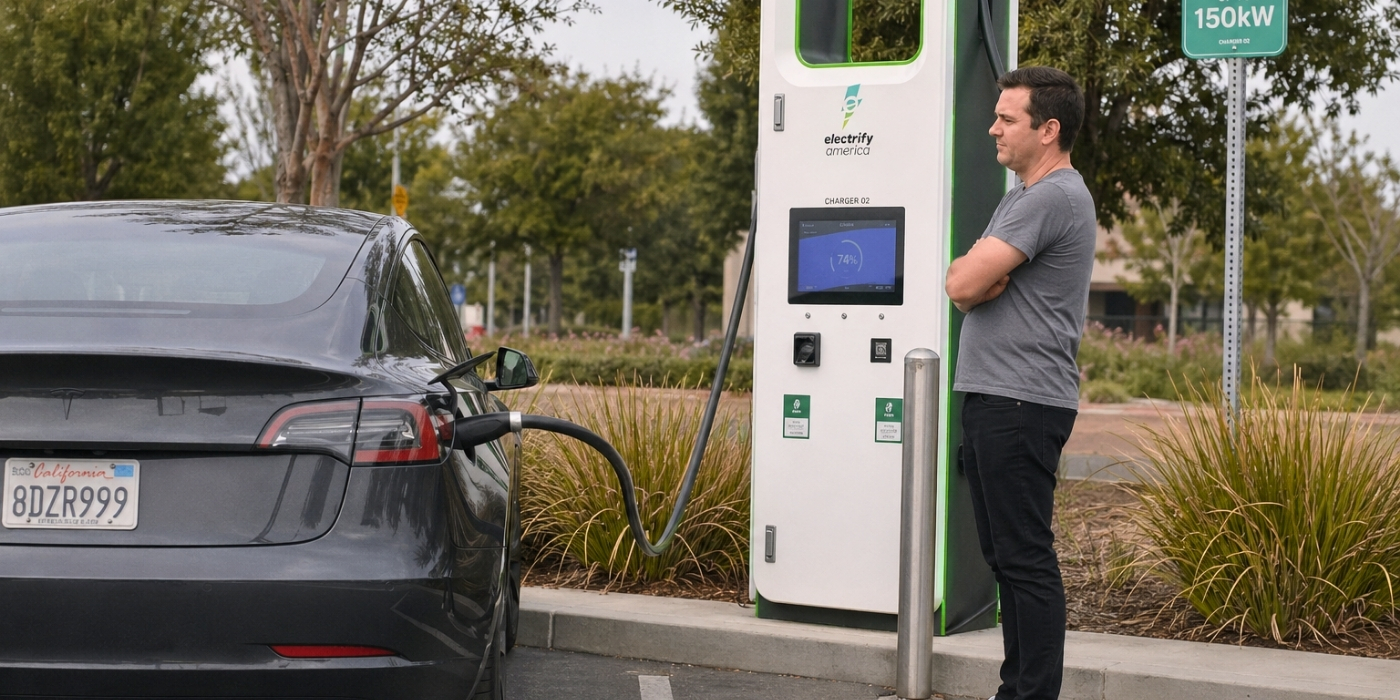
The charging infrastructure buildout in the United States has been slower and more uneven than federal projections anticipated. The National Electric Vehicle Infrastructure (NEVI) program, funded with $7.5 billion through the Bipartisan Infrastructure Law, has deployed a fraction of its planned stations. Rural and suburban coverage remains spotty. Reliability at existing public chargers continues to frustrate EV owners, with multiple studies showing that 20% to 30% of public charging sessions involve some form of equipment failure, payment issue, or wait time that wouldn’t exist at a gas pump.
For buyers who live in apartments, condos, or older homes without garage access, home charging isn’t an option. These consumers represent a large and underserved segment of the market. A hybrid solves their efficiency problem without requiring any infrastructure investment: they drive to the same gas station they’ve always used, fill up less often, and pocket the savings.
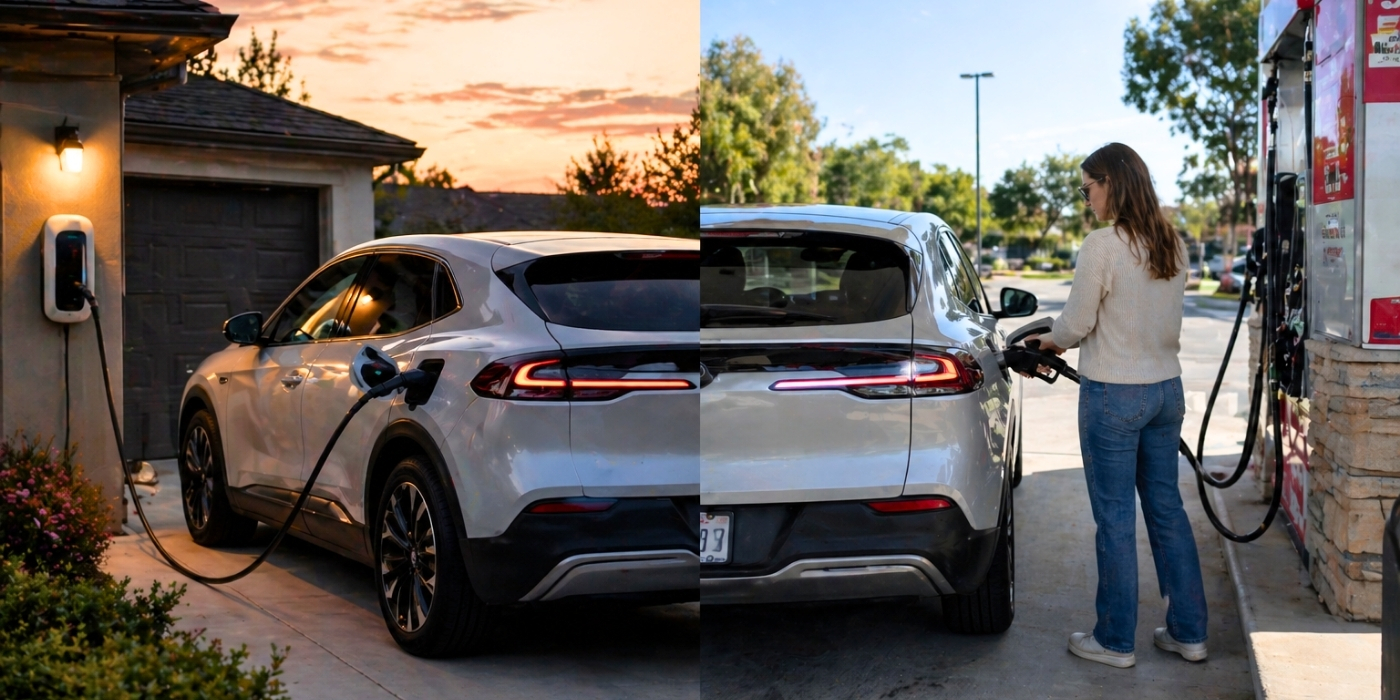
Even buyers who do have home charging access are weighing the installation cost ($1,000 to $2,500 for a Level 2 setup) and the inconvenience of relying on a single fueling method. Hybrids offer optionality. They work everywhere, in every climate, with zero behavioral change. That universality has enormous appeal in a market where BEV ownership still feels like it requires a certain lifestyle profile to work smoothly.
The OEM Pivot Back to Hybrids
Automakers are responding to the demand signal with urgency. Toyota’s hybrid lineup needs no repositioning since the company never wavered from its multi-pathway strategy. But the rest of the industry is scrambling to add hybrid options that were deprioritized or canceled during the BEV-or-bust period of 2021 to 2023.
Ford has expanded hybrid availability across the Explorer, Escape, Maverick, and F-150 lineups, with the PowerBoost F-150 hybrid becoming a quietly significant volume seller. Honda, which let its hybrid offerings thin out as it focused on the Prologue EV launch, is rebuilding hybrid content across the CR-V and Accord lines. Hyundai and Kia have added hybrid variants to the Tucson, Santa Fe, Sportage, and Sorento, and sales data from dealer groups consistently shows hybrid trims outpacing both ICE and EV versions of the same nameplate.
Even Stellantis, which had been among the most aggressive in committing to a BEV-only future for several brands, has begun revisiting hybrid and PHEV options for the North American market as Jeep and Dodge buyers push back against full-electric alternatives that don’t align with the towing capacity, range, and refueling expectations those brands are built around.
The PHEV segment deserves separate mention. Plug-in hybrids offer 30 to 50 miles of electric-only range with a gasoline engine for longer trips, giving buyers the daily EV experience without any of the range compromise. Toyota’s RAV4 Prime and the Hyundai Tucson PHEV have developed strong followings precisely because they split the difference in a way that feels low-risk to mainstream buyers. PHEVs may be the truest “bridge” technology between today’s hybrid surge and an eventual BEV future, whenever that arrives.
Is your group’s inventory mix aligned with what buyers are searching for in 2026? Torkvia helps automotive groups build data-driven inventory and marketing strategies that match real consumer demand patterns, not last year’s OEM forecasts. Talk to Torkvia →
What This Means for Dealer Groups
The hybrid surge creates both opportunity and strategic complexity for dealer groups.
On the opportunity side, hybrids sell. They sell faster than BEVs, carry healthier margins than base ICE trims, and attract a broader demographic of buyer. Dealer groups that stock hybrid inventory aggressively and market it effectively are seeing shorter days-to-sale and stronger gross profit per unit than those still over-indexed on BEV allocation.
The marketing challenge is more nuanced. Search behavior around hybrids has shifted. Buyers aren’t searching for “hybrid vs. electric” in the abstract anymore. They’re searching for specific models, fuel economy comparisons, total cost of ownership calculators, and availability by region. The content and SEO strategy that worked for “why go electric” campaigns doesn’t translate directly to hybrid demand capture. Hybrid buyers tend to be more pragmatic, more research-driven, and more price-sensitive than early EV adopters. They respond to concrete data (MPG, annual fuel savings, maintenance costs) rather than aspirational messaging about sustainability or technology.
Dealer groups also need to think about service department implications. Hybrids are more familiar to most service teams than BEVs, which require specialized training, tooling, and certification. The service revenue opportunity from a growing hybrid fleet is more predictable and less capital-intensive than building out BEV service capabilities, which makes the hybrid surge a net positive for fixed operations at most dealerships.
The inventory allocation question is the most strategic decision facing dealer principals in 2026. OEMs are still pushing BEV allocation targets that reflect corporate electrification commitments rather than current consumer demand. Dealer groups that can negotiate allocation flexibility, shifting BEV units toward hybrid variants of the same nameplate, will be better positioned to match inventory to what their local market wants to buy.
The Long View: Bridge or Destination?
The biggest open question in the hybrid resurgence is whether this represents a permanent recalibration of the electrification timeline or a temporary demand pattern that will resolve once BEV prices drop, charging infrastructure matures, and consumer confidence catches up.
The honest answer is that nobody knows. Battery costs are declining, though not as fast as optimistic projections from 2021 suggested. Charging infrastructure is expanding, though deployment timelines keep slipping. Consumer attitudes toward EVs vary dramatically by region, income level, and housing type, making national-level predictions unreliable.
What is clear is that hybrids have moved from “transitional afterthought” to “strategic priority” for nearly every major automaker selling in North America. The technology works, the economics are favorable for both buyers and dealers, and the demand signal is unambiguous. Whether hybrids eventually give way to full BEVs over a 5-year horizon or a 15-year horizon, the market has spoken about what it wants right now.
For dealer groups, the strategic move is to read the demand signal, adjust inventory and marketing accordingly, and avoid overcommitting to any single powertrain narrative. The groups that win in 2026 and beyond will be the ones flexible enough to sell what buyers want to buy, not what the industry thought they should want.
Frequently Asked Questions
Are hybrids better than electric cars?
Neither is categorically better. Hybrids offer lower upfront cost, universal fueling compatibility, and zero infrastructure requirements. BEVs offer lower operating costs for owners with home charging, zero tailpipe emissions, and access to federal tax credits. The right choice depends on individual driving patterns, budget, and charging access.
Why are hybrid cars so popular again?
Several factors converged: BEV prices remain higher than many buyers expected, public charging infrastructure has been slow to build out, insurance and depreciation costs favor hybrids, and automakers have released compelling new hybrid models across every major segment. The result is a buyer who wants better fuel economy without the tradeoffs of going fully electric.
Will hybrid cars be phased out?
Not in the near term. Most major automakers are expanding hybrid production through at least 2030, and regulatory frameworks in the U.S. continue to treat hybrids favorably as part of fleet emissions calculations. Long-term phaseout depends on BEV cost parity, infrastructure maturity, and regulatory changes that remain uncertain.
Are plug-in hybrids worth it?
For buyers who drive less than 40 to 50 miles daily and have access to overnight charging (even a standard 120V outlet works for most PHEVs), plug-in hybrids offer the best of both worlds: electric commuting with gasoline backup for longer trips. The value proposition weakens for buyers without any charging access, since a PHEV driven exclusively on gasoline performs similarly to a conventional hybrid while carrying a higher purchase price.
Which automaker has the best hybrid lineup in 2026?
Toyota remains the benchmark for hybrid breadth and reliability, with hybrid options across nearly its entire lineup. Hyundai and Kia have closed the gap with competitive hybrid offerings in the Tucson, Santa Fe, Sportage, and Sorento. Ford’s hybrid F-150 and Maverick occupy segments where few competitors offer electrified alternatives. Honda is rebuilding hybrid content after a period of underinvestment.
Need help aligning your digital strategy with the powertrain mix your market is searching for?
Torkvia’s automotive visibility frameworks help dealer groups capture demand across hybrid, PHEV, and EV search categories.Talk to Torkvia →