Uber is no longer talking about robotaxis as a distant possibility. The company has signed more than 20 partnerships with autonomous vehicle companies spanning freight, delivery, and passenger rides, with several already commercially operational. Waymo robotaxis are picking up riders in Austin and Atlanta through the Uber app right now.
A premium Lucid-based robotaxi built with Nuro is in employee testing in San Francisco. A $1.25 billion partnership with Rivian targets 10,000 autonomous R2 vehicles in San Francisco and Miami by 2028, with options for 40,000 more. And Uber says it will offer robotaxi rides in at least 10 cities by the end of 2026.
Uber robotaxis have a deployment timeline with capital behind it. And it raises two distinct sets of questions depending on which side of the transaction you sit on: what does this mean if you ride with Uber, and what does it mean if you drive for Uber?
Uber’s Strategy: Bet on Everyone
The most important thing to understand about Uber’s robotaxi approach is that the company isn’t building its own self-driving technology. It tried that once, spending billions on an internal autonomous vehicle unit before selling it to Aurora in 2020. The current strategy is fundamentally different. Uber is positioning itself as the platform layer, the marketplace that connects autonomous vehicles from multiple technology providers with rider demand.
The partnership map is sprawling. In the U.S., Uber works with Waymo and Nuro for passenger robotaxis, plus Avride, which recently launched in Dallas. Internationally, the company has deals with WeRide for operations in Abu Dhabi, Riyadh, and Dubai, Wayve and Nissan for a Tokyo pilot targeting late 2026, Momenta for Munich, and Volkswagen and Mobileye for ID. Buzz-based autonomous vans planned for Los Angeles.
On the vehicle hardware side, Uber has enlisted Rivian, Lucid, Stellantis, and others to produce the physical fleets.
The logic behind this multi-partner approach is straightforward. No single AV company has solved autonomous driving for every city, every weather condition, and every use case. By partnering with many technology providers and vehicle manufacturers simultaneously, Uber hedges against the risk that any one system fails to scale, while ensuring it has autonomous supply in as many markets as possible. Uber CEO Dara Khosrowshahi has been explicit about this. The company’s Q4 2025 earnings press release framed Uber’s position as becoming “the largest facilitator of AV trips in the world.”
In February 2026, Uber formalized this strategy by launching Uber Autonomous Solutions, a suite of services designed to help AV partners commercialize their technology through Uber’s platform.
The offering includes demand generation, fleet management, rider experience design, and regulatory support. It’s a signal that Uber sees its long-term role not as a robotaxi operator per se, but as the infrastructure layer that makes autonomous ride-hailing work at scale.
What Riders Should Expect
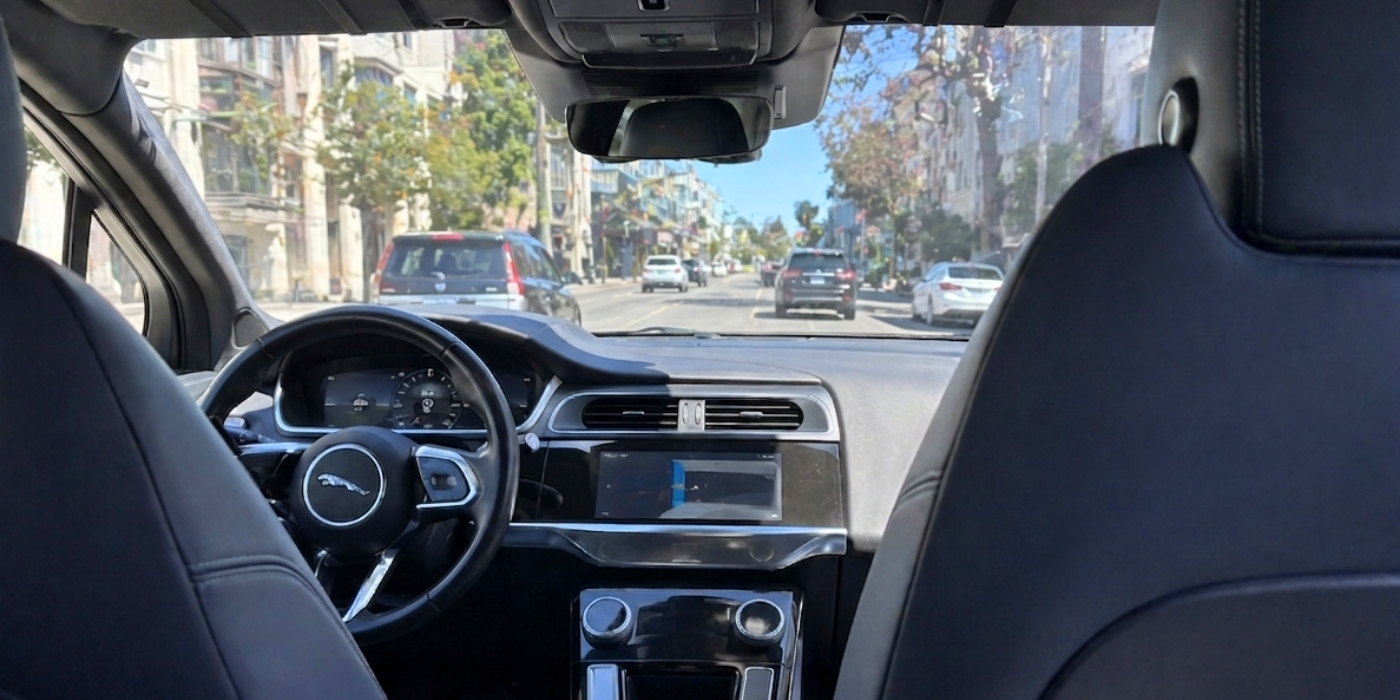
If you ride with Uber in a city where robotaxis are already operating, the experience is designed to feel familiar. In Austin and Atlanta, where Waymo vehicles are available through the Uber app, riders who request an UberX, Uber Green, or Uber Comfort may be matched with a fully autonomous, all-electric Jaguar I-PACE at no additional cost. The vehicle arrives, you get in, and it drives you to your destination. No driver, no small talk, no tipping decision.
The upcoming Lucid-Nuro robotaxi, expected to launch publicly in the San Francisco Bay Area later in 2026, takes a different approach. It’s positioned as a premium experience built around the Lucid Gravity SUV, with interactive screens that let riders control climate, heated seats, and music. Real-time visualizations show what the vehicle’s sensors detect and what maneuvers it’s planning. The interior seats up to six passengers with generous cargo space. This isn’t the utilitarian pod that most people picture when they think “robotaxi.” It’s closer to a private car service without the driver.
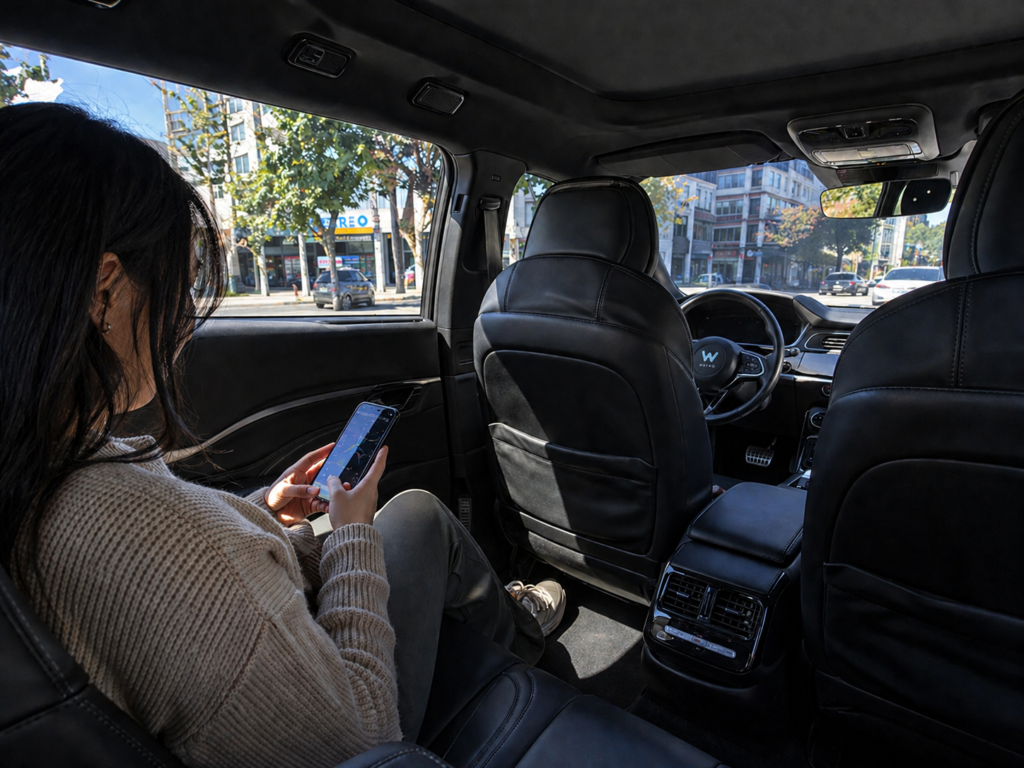
Pricing is the open question. Waymo rides on Uber currently match standard UberX pricing. But the Lucid robotaxi’s premium positioning suggests a tiered model may be coming, where riders choose between a standard autonomous ride and a luxury option. The broader market is already segmenting this way. Obi’s pricing analysis from early 2026 showed Tesla’s robotaxi service in San Francisco operating at roughly half the per-mile cost of Waymo and significantly below Uber and Lyft human-driven rides. If that pricing dynamic holds as more autonomous options enter the market, riders may eventually see cheaper fares, at least in cities with sufficient robotaxi density.
The practical limitations are worth knowing. Robotaxi coverage is geographically constrained. Waymo in Austin and Atlanta operates within defined service areas. The Lucid-Nuro service will launch in the Bay Area before expanding. You can’t hail a robotaxi in suburban Dallas and expect it to drive you to Fort Worth. These are city-center and defined-corridor services for now, and expansion to full metro coverage will take years.
What Drivers Should Expect
This is the harder conversation, and Uber’s leadership hasn’t shied away from it entirely. At an All-In podcast event in January 2026, Khosrowshahi acknowledged that autonomous vehicles will eventually replace human driving jobs, estimating that hybrid networks of humans and machines will persist for roughly the next decade before autonomous systems dominate. He noted that robotaxis will “start by taking over the easier routes” while human drivers continue to handle more complex trips, weather-impacted conditions, and underserved areas.
The timeline matters here. Uber currently facilitates over 40 million trips per day across more than 70 countries, supported by 9.7 million drivers and couriers. Even the most ambitious robotaxi deployment projections represent a small fraction of that volume. Waymo, the current market leader, is providing more than 250,000 paid rides per week across all its markets combined. That’s impressive growth, but it’s a rounding error compared to Uber’s total trip volume. The gap between “robotaxis exist” and “robotaxis replace human drivers at scale” remains enormous.
The Regulatory Patchwork: From Halifax to Robotaxi Permits
Uber and other rideshare app expansions, whether human-driven or autonomous, run through a thicket of local regulation that varies wildly from one jurisdiction to the next. And the pattern playing out around robotaxis echoes battles the company has been fighting over basic ride-hailing rules for years.
Consider Halifax. In January 2026, the Halifax Regional Municipality proposed bylaw changes that would have required ride-hailing drivers to submit background checks directly to the city, complete municipal training, and pay licensing fees, the same requirements taxi drivers already face. Uber opposed the changes, calling them duplicative red tape that would raise costs for drivers and riders. The company launched a campaign urging its drivers to contact councillors, and more than 250 did. Council voted 11-5 against the amendments, with Mayor Andy Fillmore describing them as a “regulatory burden.” The city is now studying how other jurisdictions handle the issue.
Halifax is a small market, but the dynamics are universal. Across North America, cities are still trying to figure out how to regulate ride-hailing companies that operate under fundamentally different oversight structures than traditional taxis. In Massachusetts, regulators proposed new rules in April 2026 requiring tougher background checks, annual driver training, and vehicle recall inspections. Colorado vetoed a bill in 2025 that would have mandated in-car audio and video recording during rides after Uber and Lyft threatened to leave the state. Internationally, Uber remains banned or heavily restricted in countries including Denmark, Hungary, and Bulgaria, and has faced repeated licensing challenges in London.
This regulatory fragmentation matters for the robotaxi conversation because autonomous vehicles add an entirely new layer of permitting complexity on top of existing ride-hailing rules
The Automotive Industry Implications
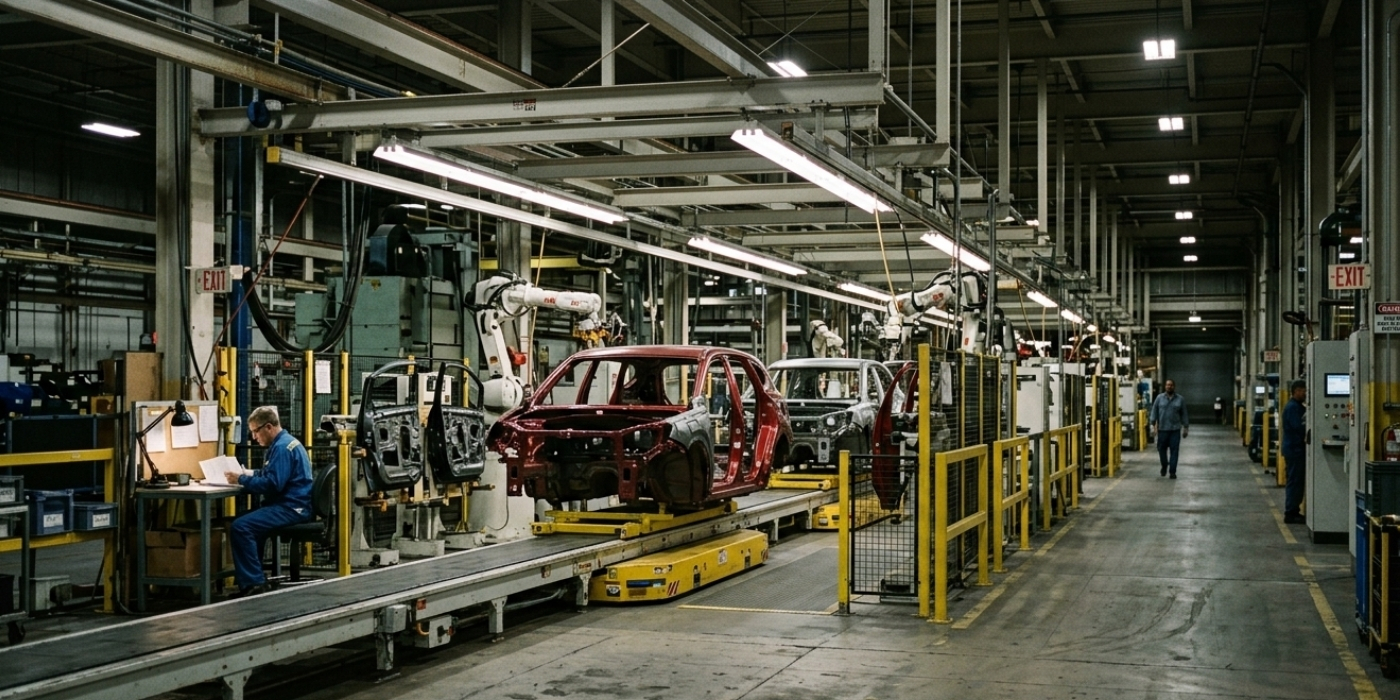
The robotaxi buildout has ripple effects that extend well beyond ride-hailing. For the automotive industry, the shift toward autonomous fleets changes who buys vehicles, how they’re configured, and how long they stay in service.
Fleet-purchased vehicles are specified differently than consumer vehicles. They prioritize durability, ease of cleaning, low maintenance costs, and total cost of ownership over features like premium audio systems or sport-tuned suspensions. The Lucid Gravity robotaxi, for example, was selected partly for its 450-mile EPA estimated range, which minimizes charging downtime and maximizes revenue hours. Rivian’s R2 was chosen for similar reasons: it’s an EV platform designed for high utilization.
For dealer groups, the fleet dynamics create a mixed picture. Large-scale robotaxi orders bypass the dealership model entirely, flowing directly from manufacturer to fleet operator. But those fleets need service, maintenance, and eventually replacement. Dealer service departments positioned to handle high-voltage EV systems, autonomous sensor calibration, and fleet-rate maintenance contracts could find a new revenue stream as robotaxi fleets scale.
The used vehicle market will also feel the effects. Robotaxi vehicles accumulate miles rapidly and cycle out of fleet service after three to five years. Those vehicles will enter the used market in volume, potentially depressing resale values for comparable models. Dealer groups with used vehicle operations should be watching fleet deployment timelines to anticipate when those units will hit the secondary market.
The Road Ahead
Uber’s robotaxi push is the company’s most consequential strategic bet since its founding. The investments are large: $300 million in Lucid, up to $1.25 billion in Rivian, $100 million in charging infrastructure, plus undisclosed amounts across its other AV partnerships. The deployment targets are ambitious: 10 cities by end of 2026, 20,000+ Lucid vehicles over six years, 10,000 to 50,000 Rivian vehicles by 2031, expansion to dozens of international markets.
Whether those timelines hold depends on variables that Uber doesn’t fully control: regulatory approvals in new markets, the pace at which AV technology proves safe enough for fully driverless operation, consumer willingness to ride without a human backup, and competitive dynamics with Tesla, Waymo, and others who may not need Uber’s platform at all.
What’s no longer in question is whether robotaxis will become a meaningful part of urban transportation. They already are in a handful of cities. The questions now are about speed, scale, pricing, and who captures the value. Uber is betting that the platform layer, not the technology layer, is where the long-term competitive advantage sits. If they’re right, the company that sold its self-driving unit for scrap six years ago may end up running the world’s largest autonomous fleet anyway.
Frequently Asked Questions
Can I ride in an Uber robotaxi right now?
Yes, in select cities. In Austin and Atlanta, riders can be matched with Waymo autonomous vehicles through the standard Uber app at no additional cost. Coverage is limited to defined service areas within those cities. The premium Lucid-Nuro robotaxi is currently in employee testing in San Francisco, with public launch expected later in 2026.
How much will Uber robotaxi rides cost?
Pricing varies by market and vehicle type. Waymo rides on Uber in Austin and Atlanta are priced at standard UberX rates. The upcoming Lucid robotaxi is positioned as a premium service and may carry higher fares. Broader market trends suggest autonomous rides will eventually cost less than human-driven alternatives, but pricing is still evolving as operators balance deployment costs with rider acquisition.
Will Uber replace all its drivers with robotaxis?
Not in the near term. Uber CEO Dara Khosrowshahi has estimated that hybrid networks of human and autonomous drivers will coexist for roughly the next decade. Robotaxis will initially cover predictable urban routes, while human drivers continue to serve suburban areas, complex trips, and markets where regulatory approval for autonomous vehicles is pending.
Which cities will have Uber robotaxis in 2026?
Uber currently offers Waymo robotaxis in Austin and Atlanta, with the Lucid-Nuro service targeting the San Francisco Bay Area for public launch later in 2026. Volkswagen autonomous vans are planned for Los Angeles. Internationally, WeRide operates in Abu Dhabi, Riyadh, and Dubai, with Wayve and Nissan targeting a Tokyo pilot by late 2026. Uber has stated a goal of offering robotaxi rides in at least 10 cities by year-end.
The mobility landscape is shifting faster than most automotive strategies account for.
Torkvia helps automotive groups build competitive positioning that anticipates autonomous deployment patterns, fleet purchasing dynamics, and the evolving search behavior of buyers navigating a market in transition.Talk to Torkvia →