California surpassed 2.5 million cumulative zero-emission vehicle sales in Q4 2025, with EVs accounting for 18.9% of new vehicle sales that quarter. The number is impressive—but the story behind it matters more than the headline. For dealerships watching this market, the real question is what the next phase of EV adoption actually looks like. Torkvia helps dealership groups decode these shifts and build marketing strategies aligned with where EV demand is actually heading.
California has grown its EV base by more than 300% since 2019. That trajectory was built on a specific combination of policy incentives, infrastructure investment, and consumer demographics that no other state has fully replicated—and that combination is now changing. Understanding what drove the first 2.5 million sales is the only way to predict where the next 2.5 million come from.

Did California Just Prove EV Demand Can Survive Without Incentives?
The federal EV tax credit expired in September 2025. The national EV market felt it immediately, with U.S. EV market share dropping to roughly 5.8% nationally. California held at approximately 19%—a gap that reflects something more durable than incentive dependency.
State Policy Filled the Federal Void
Reuters reported that California moved quickly to backstop the federal pullback, with a proposed $200 million EV incentive program advancing through the state budget process. Rather than absorbing the loss, California replaced it.
Infrastructure as a Demand Floor
California’s EV market has reached a point where infrastructure itself sustains demand. Buyers in ZEV states live in a fundamentally different ownership environment than buyers elsewhere—and that gap shapes purchase decisions in ways no incentive structure fully captures.
Charging Infrastructure Has Overtaken Incentives as the #1 Growth Lever
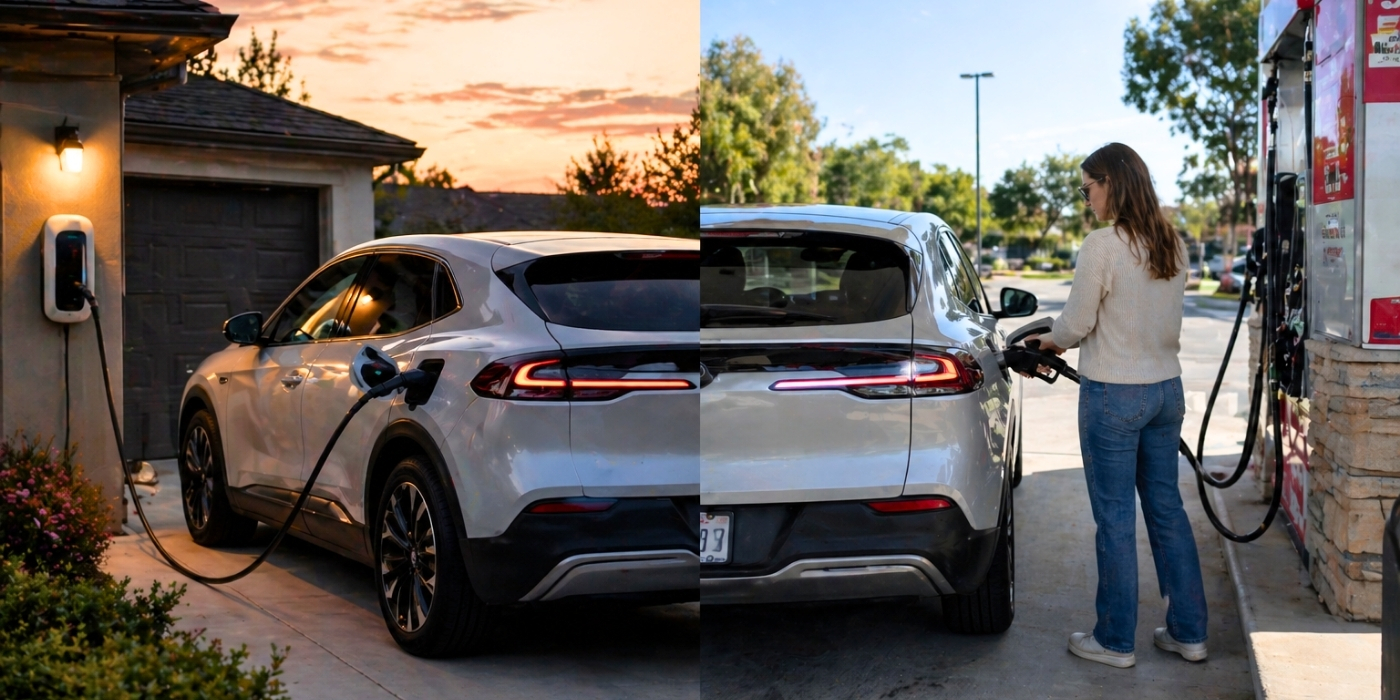
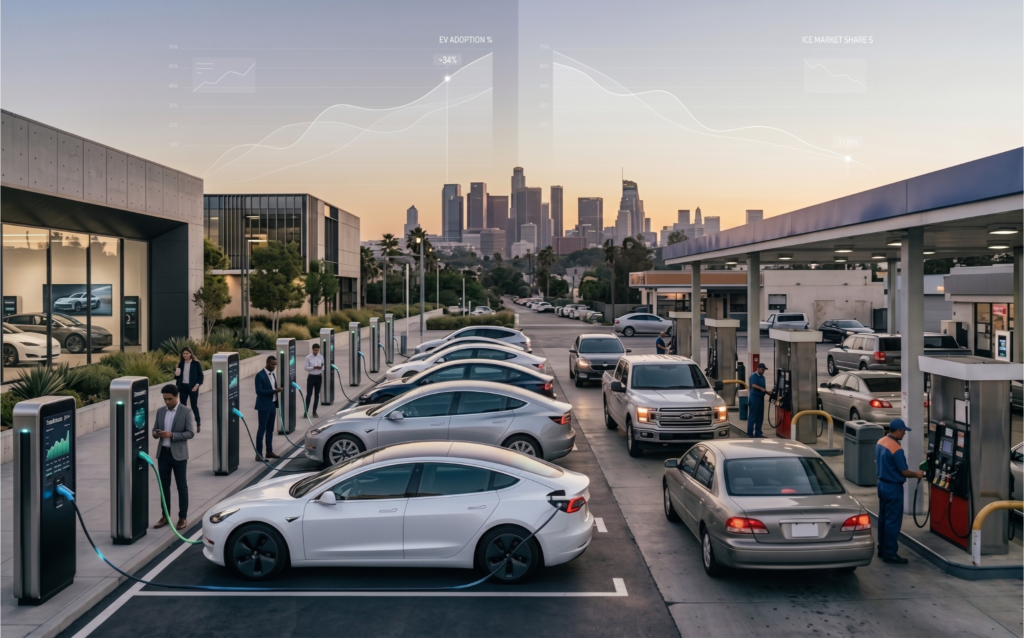
California now has more than 200,000 public and shared EV chargers plus approximately 800,000 home charging installations, according to California Energy Commission data. That total now exceeds the state’s gas nozzle count by roughly 68%.
The Access Gap Is Behavioral
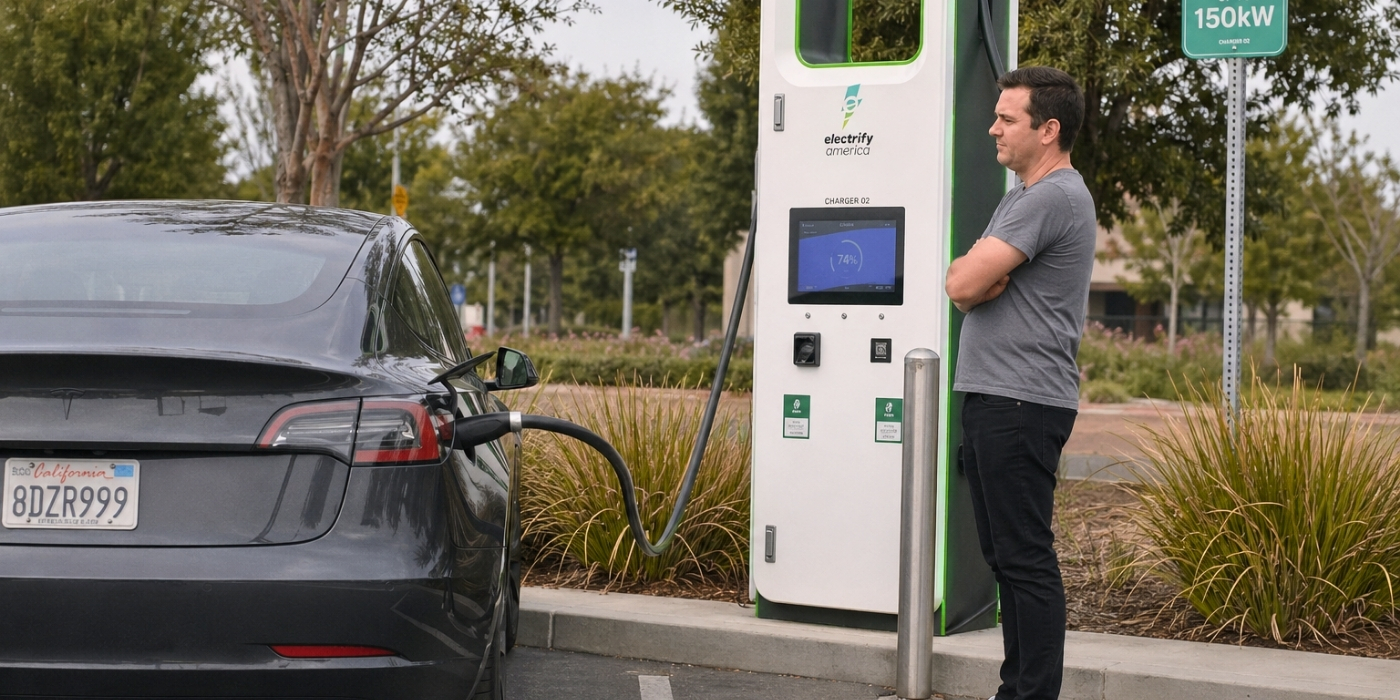
JATO’s EV adoption and infrastructure analysis found that ZEV states average approximately 880 people per public charger, compared to 2,216 in non-ZEV states. When charging is dense and reliable, range anxiety stops being a showroom objection.
What’s Funded Next
California’s 2025–2026 Clean Transportation Investment Plan commits $98.5 million to infrastructure expansion, targeting multifamily housing and urban density gaps—the segments where home charging isn’t practical and public access has historically underperformed.
Is California’s EV Market Saturating?
The milestone obscures a trend worth understanding. California’s EV market share declined from 25.3% in 2024 to 22.9% in 2025, according to the Veloz 2026 EV Market Report. That’s not a crisis—it’s a maturation signal.
Early Adopters Are Captured
The buyers who were always going to buy EVs—environmentally motivated, tech-forward, higher-income—are largely converted. Remaining ICE-loyal buyers are more price-sensitive and less responsive to the messaging that drove the first wave.
Growth Is Moving Outward
Non-ZEV states grew EV adoption by 26.5% in 2025, compared to just 4.1% in ZEV states. California is no longer where EV adoption is growing fastest—it’s where EV adoption is most established. That’s a meaningful distinction for dealerships managing inventory and marketing strategy.
The Used EV Boom Could Be Bigger Than New Sales
A large inventory of off-lease EVs from the 2021–2023 model years is now entering the used market. Used EVs solve the one barrier that incentives and infrastructure cannot fully address: upfront purchase price.
Affordability Unlocks the Next Buyer
Veloz’s affordability data identifies used EVs and utility rebate programs as the primary mechanism for reaching price-sensitive buyers in the next adoption phase. Used 2022 Chevrolet Bolts are currently available in California under $15,000—a price point that opens EV ownership to buyers structurally locked out of the new market.
A Dealership Opportunity
Used EV buyers need the same range education, charging guidance, and service assurance as new EV customers—often more, since they lack a direct manufacturer relationship. Certification programs and informed sales staff become a competitive differentiator here. Dealers who build used EV expertise now will be ahead of the curve when that inventory wave peaks in 2026 and 2027.
California vs. Federal Policy: A Split EV Future
California and federal EV policy are moving in opposite directions, and the divergence is accelerating. The federal government pulled tax credits and reduced regulatory pressure on automakers. California is funding replacement incentives, maintaining its Advanced Clean Cars II mandate for 100% ZEV new car sales by 2035, and expanding infrastructure investment.
Dealerships operating across multiple states cannot rely on a single national EV playbook. Inventory strategy, buyer messaging, and staff training that work in California will increasingly diverge from what moves vehicles in non-mandate states. Getting ahead of that split—rather than reacting to it—is where competitive advantage is built.
Choice, Not Incentives, Is Driving Adoption Now
California buyers had 149 EV models available in Q4 2025—spanning budget economy EVs to six-figure performance vehicles. The market has shifted from a Tesla-dominated landscape with limited alternatives to a competitive multi-brand environment.
Price compression is accelerating across the segment. Chinese automakers continue influencing global pricing even without direct U.S. market entry, pushing legacy OEMs to reduce margins and accelerate feature parity. The dealer conversation is shifting from “should I consider an EV” to “which EV fits what I need”—a far more productive sales dynamic. Dealers who can guide that conversation confidently are the ones closing deals.
Is California on Track for 2030?
California’s target is 5 million ZEVs by 2030. With 2.5 million reached, the math looks simple. It isn’t. The state is already behind its intermediate 2026 target of 35% new vehicle market share, currently tracking at roughly 23%.
The final 2.5 million require converting buyers who are harder to reach and more price-sensitive than the first wave. The CEC’s trajectory analysis indicates hitting 5 million requires both the proposed incentive program and continued infrastructure expansion—particularly in inland and rural areas where adoption has lagged coastal markets significantly.
The Competitive Advantage Starts Now
California’s evolution from incentive-driven early adoption to infrastructure-sustained mass-market transition mirrors what every major U.S. market will eventually experience. The used EV wave, the post-incentive demand floor, and the shift to multi-brand competition are developments dealers outside California need to anticipate—not react to.
Torkvia helps dealership groups build the marketing capability to compete in this next phase—identifying high-intent EV buyers across new and used segments, crafting market-specific messaging, and tracking performance with the precision these market shifts demand. California’s next 2.5 million EVs will be harder to sell than the first. The dealerships positioned to capture them are building that capability now.
Frequently Asked Questions
Why did California’s EV market share drop even as overall EV sales hit 2.5 million?
California’s EV market share declined from 25.3% in 2024 to 22.9% in 2025 because the early adopter segment is largely saturated. The cumulative milestone reflects the state’s installed base, while market share reflects the share of new transactions—two measurements that can move in opposite directions during market maturation.
Did the end of federal EV tax credits hurt California EV sales?
The federal incentive expiration in September 2025 created a Q3 spike followed by a Q4 pullback, but California held at roughly 19% market share compared to 5.8% nationally. The state’s proposed $200 million replacement incentive program and infrastructure maturity insulated it from the full impact other states experienced.
How many EV chargers does California actually have compared to gas stations?
California has more than 200,000 public and shared EV chargers plus approximately 800,000 home charging installations—exceeding the state’s gas nozzle count by around 68%. ZEV states average 880 people per public charger, compared to 2,216 in non-ZEV states, according to JATO’s infrastructure analysis.
Are used EVs going to be a significant part of California’s market going forward?
Yes. A large wave of off-lease EVs from 2021–2023 is entering the used market, and Veloz identifies used EVs as the primary mechanism for reaching price-sensitive buyers structurally excluded from the new market. Used EVs under $15,000 are now available in California, significantly changing the affordability calculus.
Is California on track to hit 5 million EVs by 2030?
California has reached the numerical halfway point, but the remaining 2.5 million require converting harder-to-reach, more price-sensitive buyers. The state is already below its intermediate 2026 target of 35% market share and will need its proposed incentive program and infrastructure expansion—particularly in inland and rural areas—to close the gap.
Why are EV sales growing faster in non-ZEV states than in California now?
Non-ZEV states grew EV adoption by 26.5% in 2025 compared to 4.1% in ZEV states because those markets are in earlier adoption phases with more room to grow. California’s lower growth rate reflects a mature market, not declining interest—its base is large enough that smaller percentage gains still represent significant absolute volume.
What does California’s policy split with the federal government mean for dealerships nationally?
The divergence between California’s expanding EV mandates and the federal government’s reduced EV support is creating regional market gaps that will widen through 2026. Dealerships operating across multiple states will need differentiated inventory and marketing strategies—what works in California will increasingly diverge from what drives sales in non-mandate states.