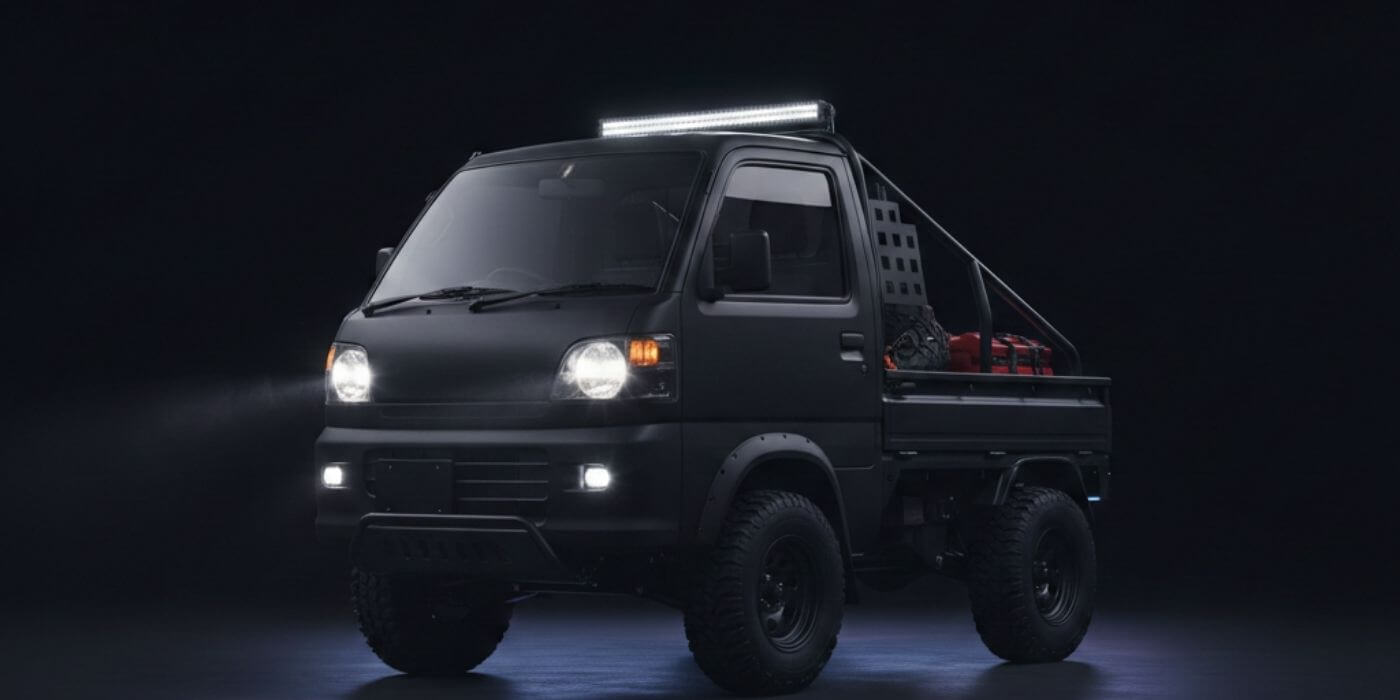
Are kei trucks legal in California? It’s one of the most frequently searched questions among automotive dealers and importers exploring alternative vehicle options. The short answer: mostly no, with specific exceptions. California enforces some of the strictest vehicle regulations in America, creating substantial barriers for these compact Japanese imports.
California’s stance on kei trucks differs dramatically from states like Texas or Colorado. While some regions welcome these fuel-efficient mini trucks, California’s regulatory framework imposes speed limits, emissions hurdles, and registration restrictions that effectively block most street use. For dealers considering kei truck inventory, knowing the compliance landscape prevents costly mistakes.
What Makes Kei Trucks Different
Japanese kei trucks belong to a vehicle category built under Japan’s “keijidosha” regulations. These compact haulers measure approximately 11 feet long and just under 5 feet wide, carrying engines maxing out at 660cc. Originally designed for Japan’s narrow urban streets, they’ve gained traction worldwide for agricultural work, light commercial hauling, and specialized business applications.
Popular models like the Suzuki Carry, Daihatsu Hijet, and Honda Acty deliver exceptional fuel economy, commonly achieving 40-45 miles per gallon. Their bed capacity handles serious loads despite their small footprint.
The fundamental issue: kei trucks weren’t manufactured to meet Federal Motor Vehicle Safety Standards (FMVSS). They lack modern safety equipment Americans expect. No airbags. Minimal crash protection. Basic lighting systems.
Federal Import Rules: The 25-Year Gateway
Federal law provides one clear pathway for kei truck imports. The 25-year rule exempts vehicles 25 years or older from FMVSS compliance requirements. This means a 2001 Suzuki Carry becomes federally eligible for import in 2026.
Importers must file DOT Form HS-7 at the port of entry, declaring age exemption from safety standards. Additionally, EPA Form 3520-1 claims emissions exemption for vehicles 21 years or older. Once cleared through customs, the vehicle can legally enter the United States. This federal clearance doesn’t guarantee street legality, though.
Every state controls its own registration and road use requirements. Federal approval simply means you can bring the vehicle across the border and title it.
California’s Regulatory Framework
CARB Emissions Standards
The California Air Resources Board (CARB) functions as the state’s emissions authority. CARB certification is mandatory for any vehicle seeking street-legal registration. Most kei trucks fail to meet these standards, particularly models manufactured in the 1990s and early 2000s that now qualify under the 25-year rule.
CARB enforces stricter emissions requirements than federal EPA standards. Even vehicles exempt from federal emissions testing must still satisfy California’s criteria for registration.
DMV Registration Barriers
California’s Department of Motor Vehicles (DMV) rarely grants standard vehicle registration to kei trucks. The registration process requires proof of CARB compliance, proper safety equipment, and conformance with state vehicle codes.
California Highway Patrol Enforcement
The California Highway Patrol (CHP) actively enforces vehicle compliance regulations. Kei truck owners have reported citations, vehicle impoundments, and registration revocations. Operating an unregistered or improperly registered vehicle on California roads risks fines, impoundment fees, and potential legal complications.
Where Kei Trucks Can Legally Operate in California
Off-Highway Vehicle (OHV) Registration
California permits kei trucks registered as Off-Highway Vehicles. OHV status allows operation on private property, designated off-road areas, and specific OHV parks. This registration class explicitly prohibits street use, including city roads, county highways, and state routes.
Agricultural operations frequently register kei trucks as OHVs for farm work. Nurseries, vineyards, and ranches use them within property boundaries.
Private Property Use
Kei trucks operate freely on private property without registration requirements. Industrial complexes, large agricultural operations, and gated communities frequently deploy them for internal logistics.
Road Use Restrictions
California effectively prohibits kei trucks from public road use through stringent CARB emissions requirements and safety standards. Highway use is banned statewide, and interstate travel is prohibited in all 50 states for kei trucks, regardless of registration status.
Even if registration were theoretically possible, CARB certification requirements present insurmountable barriers for most vehicles. Most kei trucks can’t satisfy these requirements without extensive modifications costing thousands of dollars, often exceeding the vehicle’s value.
Modification Requirements for Compliance
Bringing a kei truck into California compliance requires substantial investment:
Safety Equipment Upgrades:
- DOT-approved lighting systems
- Proper mirrors meeting size requirements
- Functioning seatbelts for all positions
- Windshield wipers and washers
Emissions Modifications:
- Engine modifications to meet CARB standards
- Catalytic converter installation and testing
- CARB certification process
These modifications frequently cost $5,000 to $15,000. For vehicles originally valued at $3,000 to $8,000, this investment rarely makes financial sense.
How California Compares to Other States
States take wildly different approaches to kei truck legality. Texas reversed its ban in April 2024, now allowing 25-year-old kei trucks full registration after safety inspections. Colorado permits operation on roads under 45 mph with proper safety equipment.
Several states completely prohibit kei trucks on public roads: Maine, Georgia, Rhode Island, New York, and New Jersey join California in restrictive policies.
This patchwork creates challenges for automotive groups operating across multiple states. A vehicle legally registered in Idaho becomes contraband crossing into California.
Business Implications for Dealers and Importers
Limited California Market
Dealers face a constrained market for kei trucks in California. Without street-legal registration options, potential buyers shrink to farm operations, private property owners, and off-road enthusiasts.
Liability Considerations
Selling vehicles with unclear legal status creates liability exposure. Clear disclosure about registration limitations protects dealers from legal claims and reputation damage.
Inventory Strategy
California-based dealers should focus inventory on eligible vehicles: properly certified imports, vehicles modified to CARB compliance, or units explicitly sold for off-road use only.
Future Outlook: Potential Regulatory Changes
Electric kei trucks may offer a compliance pathway. Zero-emission vehicles align with California’s environmental goals better than gasoline models. Some manufacturers now produce electric versions meeting modern safety standards.
Legislative changes remain possible but uncertain. California’s historical commitment to stringent vehicle standards makes similar changes less likely without significant industry pressure or environmental benefits.
Strategic Recommendations for Automotive Groups
Torkvia specializes in helping automotive groups navigate complex regulatory environments. Consider these strategies:
1. Focus on Off-Road Markets. Target agricultural customers, private property operations, and recreational off-road users.
2. Diversify Geographic Operations. Consider establishing operations in kei-friendly states like Texas, Idaho, or Colorado.
3. Monitor Regulatory Developments. Track CARB policy changes, DMV guidance updates, and legislative proposals.
4. Partner with Compliance Specialists. Work with importers and modification shops specializing in CARB compliance.
5. Transparent Customer Communication. Clearly disclose registration limitations, use restrictions, and compliance costs.
Practical Steps for Import and Registration
For dealers attempting California registration:
Step 1: Verify Vehicle Age. Confirm the vehicle manufactured date. The 25-year rule measures from manufacture date.
Step 2: Federal Import Process. File required forms at port of entry. Pay applicableimport duties (typically 2.5% for trucks).
Step 3: CARB Compliance Assessment Have the vehicle evaluated by a CARB-certified emissions testing facility. Determine required modifications and get cost estimates.
Step 4: Safety Equipment Installation. Install required safety equipment before approaching DMV. Document all modifications.
Step 5: DMV Registration Attempt. Present documentation including customs forms, ownership proof, CARB compliance certificate, and safety equipment verification. Be prepared for potential rejection.
Step 6: Consider OHV Alternative. If street registration is denied, pursue OHV registration for customers needing private property use vehicles.
Why Automotive Groups Choose Torkvia
Navigating vehicle compliance requirements across multiple states demands specialized expertise. Torkvia’s automotive industry experience helps dealers and importers understand regulatory landscapes and position inventory strategically. From marketing support to network access connecting with compliance specialists, Torkvia provides comprehensive resources automotive groups need.
Torkvia’s proven track record supporting automotive groups ensures you’re working with experts who prioritize your success. Ready to explore California’s automotive market opportunities while avoiding compliance pitfalls? Contact Torkvia to discuss strategies that position your automotive group for growth.