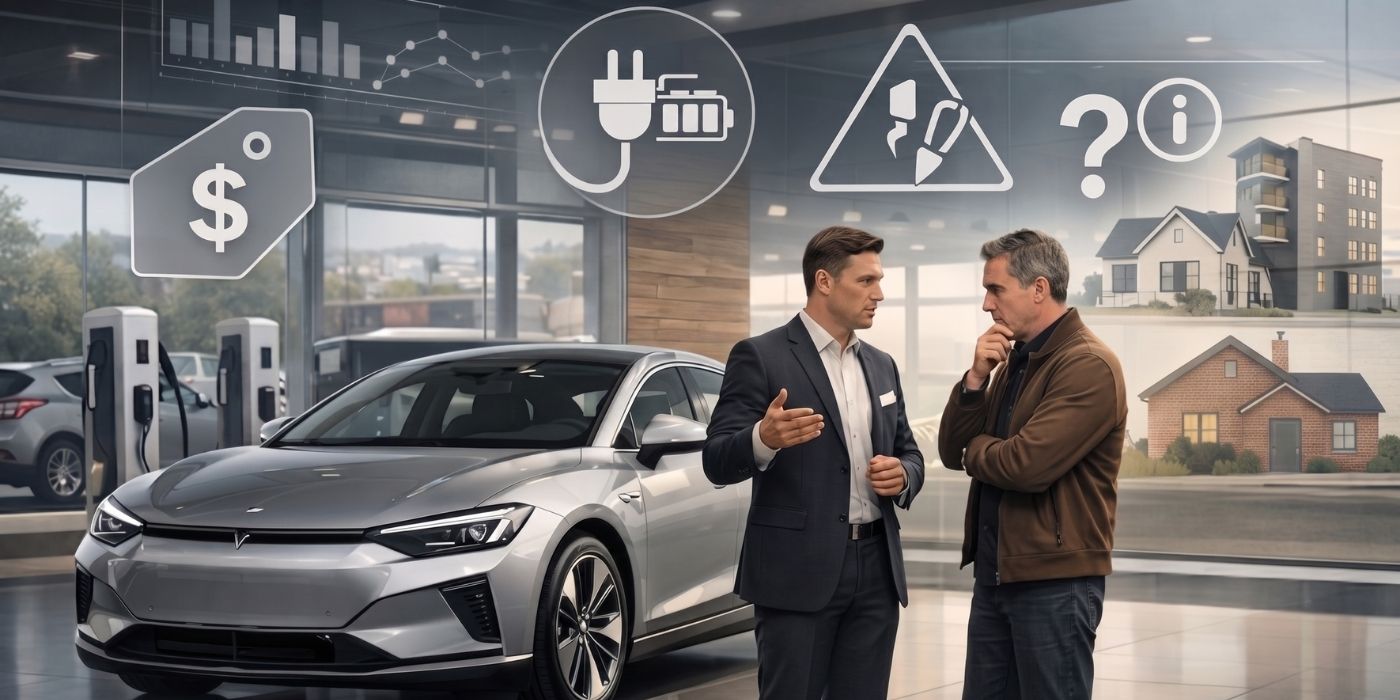
Electric vehicle sales exceeded 20 million units in 2025, accounting for roughly a quarter of all new cars sold globally. On paper, the EV transition looks unstoppable. On the showroom floor, buyers arrive with real objections, incomplete information, and anxieties that have evolved well past the “range panic” headlines from five years ago. Torkvia helps dealership groups close that gap through AI-powered marketing platforms and data-driven advertising strategies built specifically for automotive retail.
For dealerships, the gap between global trend lines and individual buyer hesitation is where sales are won or lost. Most barriers to EV adoption in 2026 are not structural—they are informational and experiential. Buyers who get the right education, the right showroom experience, and the right financing conversation convert. Dealers who treat EV objections as fixed lose deals to competitors who don’t.
The State of EV Adoption Heading Into 2026
Global EV sales rose 20% in 2025 to roughly 20.7 million vehicles. Despite that momentum, analysts expect growth to slow in 2026 as policy incentives shift and market uncertainty increases. That deceleration is not a demand problem—it is a conversion problem.
Buyers are interested, but hesitation is keeping them in ICE vehicles or on the fence. Dealers who understand exactly where that hesitation originates—and build their sales process around it—convert at a meaningfully higher rate. Here are the five barriers that most reliably stall EV sales in 2026, along with what dealers can do about each one.
Barrier 1: Purchase Price and Battery Cost Concerns
The sticker price remains the single most cited reason consumers do not buy EVs. AAA survey data shows 59% of consumers cite purchase price as a deterrent, while 62% worry specifically about battery repair costs—a concern that often runs higher than range or charging worries.
The IEA’s 2025 Global EV Outlook confirms that while EVs frequently deliver lower lifetime operating costs, the upfront price gap remains the dominant adoption barrier. Dealers who lead with monthly payment comparisons, lifetime fuel and maintenance savings, and available tax credits reframe the conversation before sticker shock takes hold.
Barrier 2: Charge Anxiety Has Replaced Range Anxiety
Early EV adoption conversations centered almost entirely on range. In 2026, that question has largely been answered by improving battery technology. Research published in Service Science indicates that EV buyers now experience “charge anxiety”—uncertainty about charger availability, wait times, and equipment reliability—rather than worry about battery range itself.
Buyers are no longer asking “can I make it there?” They are asking “will the charger work when I arrive?” That is a fundamentally different conversation, and dealers who still deliver range-focused rebuttals are addressing a concern the buyer is no longer raising.
Barrier 3: Charging Infrastructure Reliability
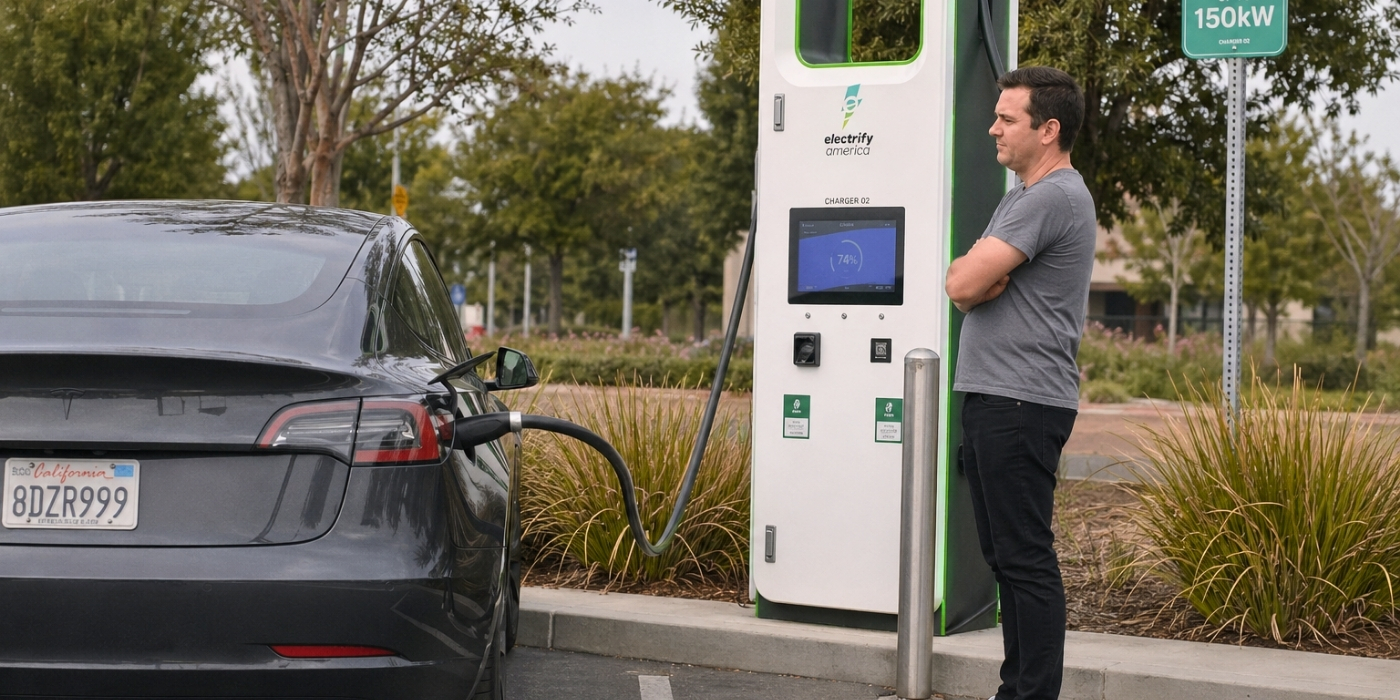
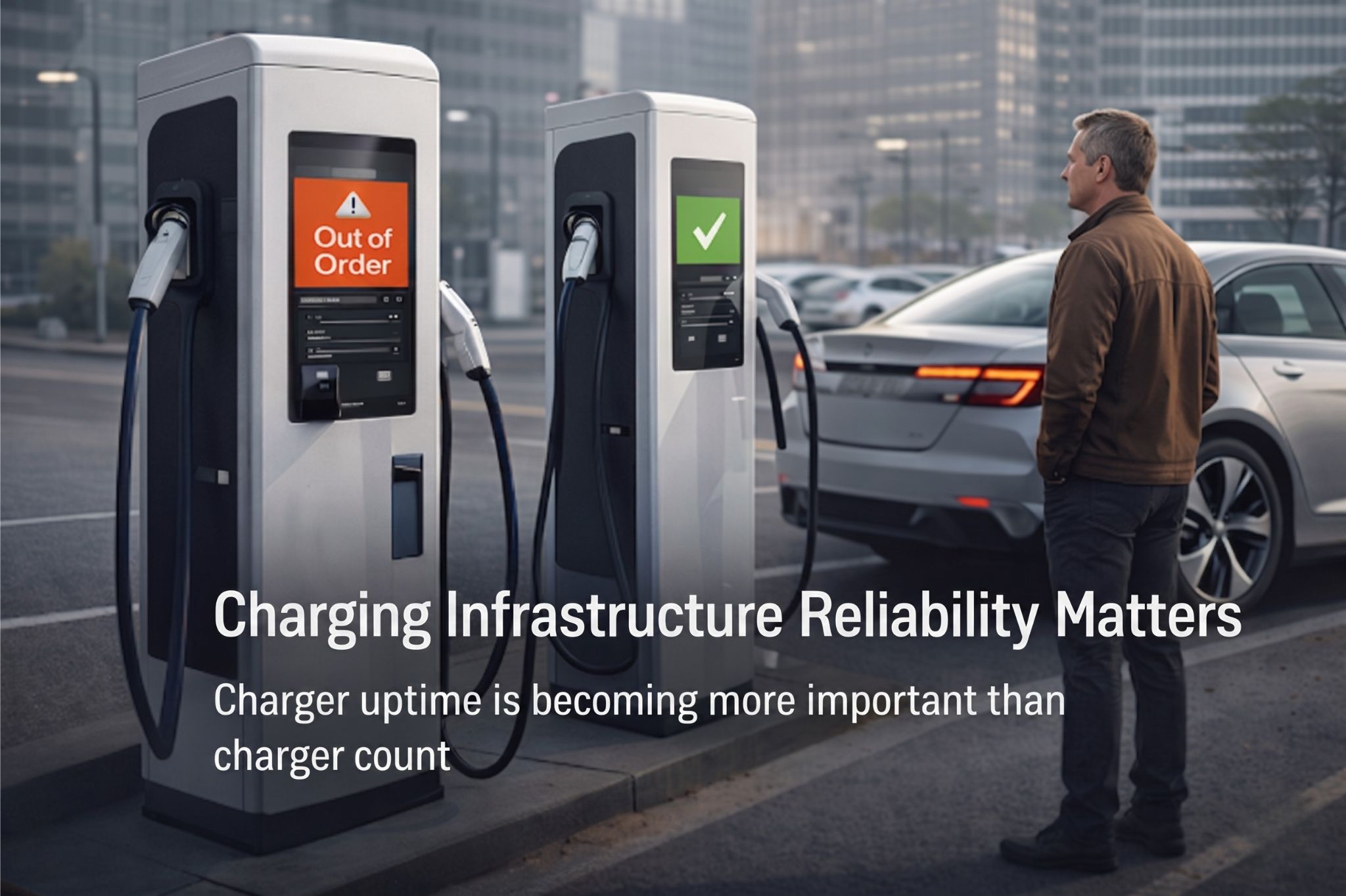
The reliability concern behind charge anxiety is well-founded. Research from Harvard Business School found that roughly 20% of public charging attempts in the U.S. fail due to broken equipment or unavailable stations. Most EV coverage focuses on charger count. The real issue is uptime.
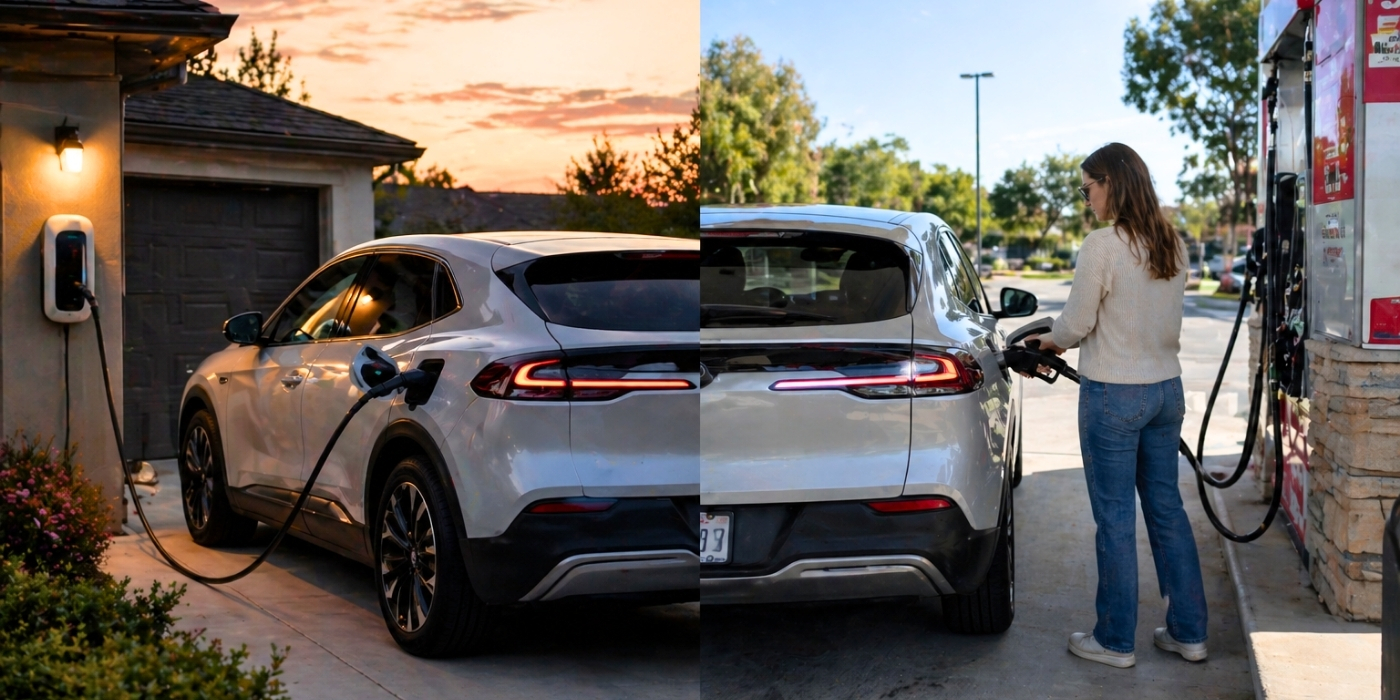
Public charging stations globally surpassed 5 million in 2025, but scale does not equal reliability. Educating buyers on home charging setup, demonstrating trip-planning tools, and explaining fast-charging networks with stronger maintenance records all reduce the practical impact of public charging uncertainty.
Barrier 4: The Consumer Knowledge Gap
More than half of drivers who have never driven an EV report lacking sufficient information about EV ownership, according to 2026 research from Cox Automotive. This is not a price objection or an infrastructure objection—it is an education gap.
Academic research reinforces this directly: informational interventions increase EV adoption intent more reliably than financial incentives alone. Dealerships that build EV literacy into the sales process—charging demonstrations, ownership walkthroughs, real-commute test drives—are addressing the barrier where it actually lives.
Barrier 5: Socioeconomic and Housing Barriers
This is the barrier most EV content ignores. Research shows that lower-income households and renters face compounding barriers to EV ownership—they cannot install home chargers, have less access to workplace charging, and face higher proportional upfront costs.
Plug-in hybrids provide a practical on-ramp. Public charging education removes the assumption that home charging is a requirement. Dealers who treat socioeconomic variation as a fixed barrier rather than a segmentation opportunity are leaving a meaningful share of the market on the table.
How Dealerships Can Fix These Barriers
Build EV Education Into the Sales Process
Charge anxiety and the knowledge gap share a root cause: buyers do not know enough about EV ownership before they arrive. Structured EV walkthroughs covering home charging, real-world range, and maintenance differences should be standard in every sales conversation—not an optional add-on.
Lead TCO Conversations, Not Just Sticker Price
When buyers raise price concerns, the response that converts is a comparison, not a discount. Showing the 5-year cost of fuel and maintenance against an EV equivalent addresses both the 62% worried about battery costs and the 59% deterred by purchase price.
Use Charging Infrastructure Data in Marketing
Charging infrastructure accessibility accounts for roughly 42% of consumer intent to adopt EVs. Local charger density is a marketing signal, not just a policy metric. Dealers in expanding infrastructure markets have a concrete, evidence-backed message for their advertising.
Address Perception Gaps With Test Drive Programs
Fewer than 8% of EV drivers have ever run out of charge, and range anxiety declines significantly after real ownership experience. EV-specific test drive events and extended loaner programs replace theoretical worry with direct evidence—the fastest conversion tool on this list.
Segment by Housing and Income, Not Just Budget
Apartment-dwelling buyers need a different pitch—one centered on DC fast charging access, plug-in hybrid options, and public charging partnerships. Identifying this segment early and routing them to the right product path increases conversion without requiring a price concession.
How Torkvia Helps Dealers Convert EV Buyers
Every barrier above is addressable through better buyer education, smarter segmentation, and more targeted messaging. None require waiting for battery prices to fall or the grid to improve. They require reaching the right buyer with the right message at the right moment—and executing that consistently across every channel.
Torkvia’s AI-powered marketing platform gives dealership groups the tools to do exactly that—predictive analytics identifying high-intent EV buyers, multi-channel campaign management, and real-time performance tracking. Dealers using Torkvia have seen 27% more appointments, 26% higher conversion rates, and 24% increases in repurchase rates. Contact Torkvia to build an EV marketing strategy around how buyers actually decide in 2026.
EVs Are Selling—The Question Is Who’s Selling Them
The dealers capturing EV demand are not waiting for barriers to disappear. They understand the specific objections—charge anxiety, not range anxiety; battery cost worry beyond sticker price; knowledge gaps as much as infrastructure gaps—and build their sales process around solving them. The market is moving with or without you. The opportunity is in the room. The conversion happens in the conversation.
Frequently Asked Questions
Which federal tax credits are available for EV buyers in 2026, and how should dealers communicate them?
The federal Clean Vehicle Credit still offers up to $7,500 for qualifying new EVs purchased through a dealership, subject to income caps and vehicle MSRP limits set under the Inflation Reduction Act. Dealers should confirm eligibility at the point of sale rather than leaving buyers to research it independently—misinformation about credit availability is one of the fastest ways to lose an otherwise motivated buyer.
How should dealerships prepare their service departments for growing EV inventory?
EV service requirements differ significantly from ICE vehicles—fewer oil changes and brake jobs, but greater demand for software diagnostics, battery inspections, and high-voltage system training. Dealers who invest in certified EV technicians and updated service bay equipment now are better positioned to retain EV customers long-term, since service revenue and repurchase rates are closely linked.
Is the used EV market a viable entry point for price-sensitive buyers?
Used EVs have become an increasingly practical option, with certified pre-owned models now available across most major brands at significantly lower price points than new inventory. Dealers who actively merchandise used EVs alongside new models give hesitant buyers a lower-stakes on-ramp to ownership, which can accelerate the broader adoption conversation on the lot.
How should dealers adjust their inventory mix as EV adoption accelerates?
Forecasts suggest EVs could account for roughly 27.5% of global vehicle sales in 2026, which means inventory planning decisions made today will directly affect lot performance within the next 12 to 18 months. Dealers should work with OEM partners to align EV stock with local charging infrastructure density and demographic data rather than applying a uniform national strategy.
What role do plug-in hybrids play in a dealership’s EV strategy?
Plug-in hybrids serve as a proven conversion bridge for buyers who are interested in electrification but not ready to commit to a fully battery-electric vehicle. For apartment dwellers, buyers in rural areas with limited charging access, and consumers deterred by upfront EV costs, a PHEV sale today often becomes a BEV sale at the next purchase cycle.
How do EV warranties compare to ICE vehicle warranties, and does it affect buyer confidence?
Most major OEMs offer 8-year, 100,000-mile battery warranties on new EVs, which directly addresses the battery repair cost concern cited by 62% of consumers in AAA surveys. Dealers who proactively explain warranty coverage during the sales conversation—rather than waiting for buyers to ask—remove one of the most persistent emotional barriers before it becomes an objection.
Should dealerships market EVs differently by region?
Yes. EV adoption rates vary significantly based on local charging infrastructure density, commute distances, and state-level incentives. A dealership in a metro area with dense fast-charging coverage can lead with convenience messaging, while a rural dealer is better served emphasizing plug-in hybrids and home charging setup—tailoring the message to the infrastructure reality buyers will actually experience.